A family history of the Flemings who came from Perthshire in 1843 to settle in Derby Township, Grey County. We follow the family into the mid 1900s as they dispersed across North America..
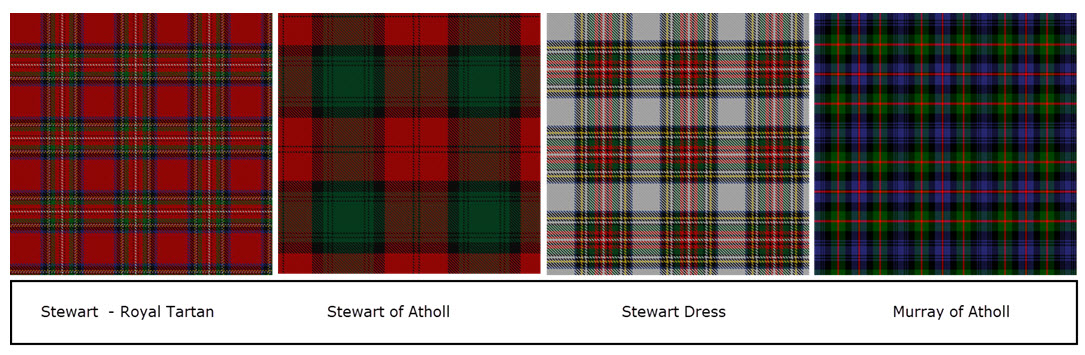
Further, Scottish clan maps do not list a Fleming clan. We note, however, that the clans Stewart and Murray are present in the Perthshire area, where Alexander Fleming and his wife, Jean Stewart, lived in the early 1800s. See the Scottish clan map on Wikipedia.
What are tartans, and why are they associated with clans?
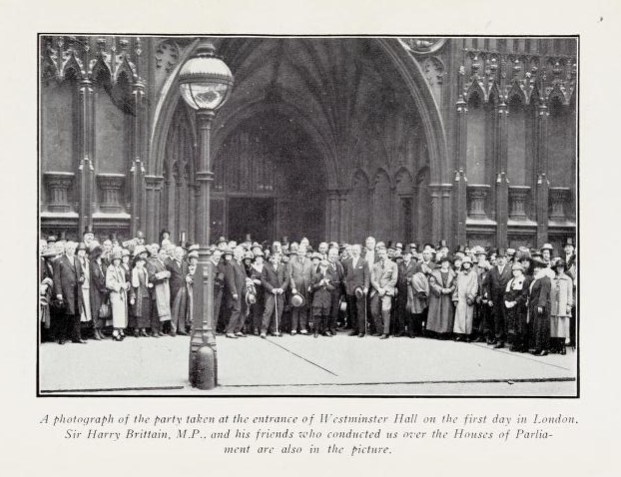
Canadian News Editors at Entrance to Westminster Hall, June 1924. Photo from Pilgrims of the Press.
At long last, Christopher Alexander (C.A.) Fleming, educator and publisher in Owen Sound, Ontario, was embarking on a voyage to the United Kingdom. The year was 1924 when Europe was rebuilding after the war of 1914-18. Roy Fleming, his cousin, had emphatically recommended such a trip after his own in 1903.
C.A. – you know you are rich – you might cease from your labors for two months and take a trip to the Old Country and see these places – see that land of true beauty and sweet traditions – the land of your fathers, which age will never dim. [Letter dated 14 October 1903]
Arranged by the Canadian Weekly Press Association for editors of weekly newspapers, the tour covered Belgium, Paris, and the major cities in the United Kingdom. There were 171 individuals in the party, of whom 101 were associated with some 100 weekly Canadian newspapers. Of these editors, 83 were men and 18 women. Seventy family members travelled with them. Many of the editors were from Ontario, and smaller numbers from the Atlantic provinces and the West. [Davies, “Who’s Who”]
C.A. owned the Daily Sun-Times and the weekly Cornwall Freeholder. His eldest daughter, Lillian, who was 37 and a kindergarten teacher, accompanied him on a trip that became the highlight of her life – especially the garden party at Buckingham Palace.
Over the eight weeks, C.A. mailed letters to the Daily Sun-Times with reports on the social events and the places – the streets, the people, the exhibits and tours. These were dense with descriptions of the farmlands and industrial sites and attentive to points that his Grey County readers would appreciate. He later published his reports as a collection in Letters from Europe.
W. Rupert Davies, of The Renfrew Mercury in Renfrew, Ontario, and former president of the Association, organized the itinerary and meetings with dignitaries and press associations. He published his account in Pilgrims of the Press, in which he explained that this endeavor was to be “an educational tour with the idea, not only of establishing a closer relationship between the weekly editors of Canada and the newspaper fraternity of the Old Land, but in order that we should all get first-hand knowledge of the Mother Country and some of its problems.” [Davies, p. 3] (Davies, who many years later was appointed to the Canadian Senate, brought his wife Florence McKay and their son Robertson – the Robertson Davies who grew up to be a journalist and acclaimed novelist.)
The idea for conducting such an ambitious tour was rooted in a strong sentiment for the British Empire. The elite of the Empire Press Union and the Newspaper Society in England provided full support and likely direction. We might surmise that their motives were to strengthen diplomatic and economic bonds between Canada and Britain. Notwithstanding that Canada had just fought for “King and Country,” Canadians were pressing instead for autonomy and independence from imperial requests.
A few notable news items about resources have come to my inbox from genealogy newsletters.
Ontario Ancestors announced in its eWeekly Update (Ontario Genealogical Society) that Vernon’s City Directories for Ontario are being digitized.
John D Reid in Canada’s Angle-Celtic Connections provided an update about the remarkable Statistical Accounts of Scotland and news about additions to Newspapers.com.
Dick Eastman in Eastman’s Online Genealogy Newsletter highlighted the discovery that some books published between 1924 to 1964 may now be in the public domain and online.
In June 2018 I had the great pleasure of visiting the Highlands of Scotland to walk the land of the Fleming home of Kirrandrum, the farm outside Ballinluig in Logeirait Parish. I was guided by Eddie Thomson of Heartland Tours. We found the remains of Alexander’s house, which he built himself, and some of the other buildings, as well as the dry-stone wall Alexander built and which still stands intact. Most of all, we saw surrounding hills and the Tay valley almost as they were when Roy Fleming and family members visited in 1903, and even as the Fleming family saw them when they left for Canada in May 1843.
A complete account of the visit with photos and video and reference to Roy Fleming’s description of his visit is provided in Walking Kirrandrum June 2018
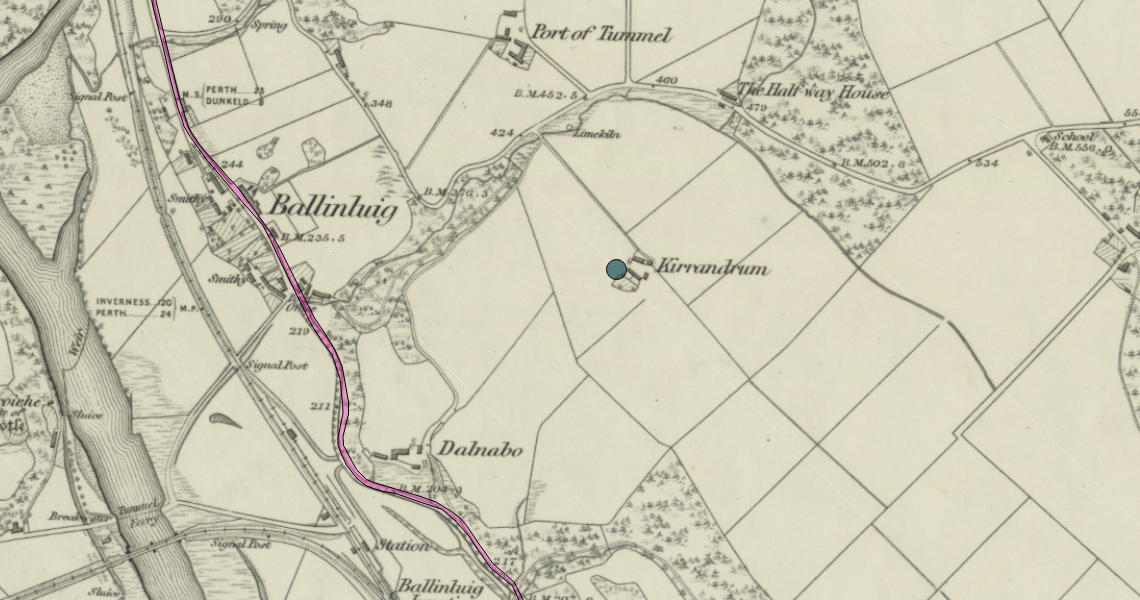
The map below from Canmore shows the location of Kirrandrum relative to Ballinlluig and to the adjacent Dalnabo.
Ballinluig area showing Kirrandrum and Dalnabo. Source: Canmore – Ordnance Survey 1843-1882.
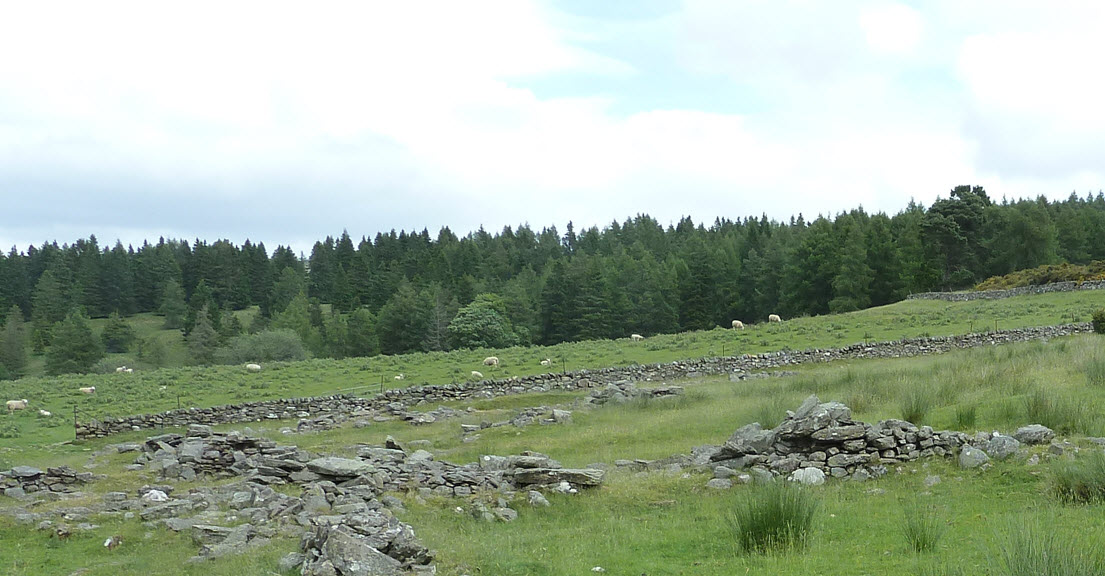
Cragganfearn looking east – rock foundations, wall, and sheep in the background (Photo: G Harris)
Where there had once been a village of four families at “Upper Cragganfearn”, only the crumbling walls of a steading and the foundations to a few cottages and farm buildings remain.
Sheep graze in the fields of this quiet place. It was windy on the sunny June afternoon when Eddie Thomson of Heartland Tours led me to the site. Along the small stream, he pointed out the remnant of what might have been a sawmill. Past the gate, we could see a stone building that still stood high on the hill. We made our way uphill on a path and across the fields, nodding to the nearby sheep, to come to marvellous panoramic views of the hills. Continue reading →

 The Flemings of Derby Township
